Easter weekend, my husband, my mom, and I sat around the table.
We were talking about family, culture and history, and quietly opening the door to conversations we never had. My mom started narrating stories of my grandmother.
My grandmother used to ride her bike through the sugarcane fields. She would quietly purchase harvest vouchers from Aboriginal farmers and resell them for five Taiwanese dollars each. Enough vouchers to cover hectares of harvest, without any formal institution. No bank. No investor. Just a system she built from what she knew.
Then my mom told me about her own version of this work.
In her community, she helped organize women to pool their money together. It was a rotating fund where everyone contributed, and eventually everyone had a turn to draw from it. There was no loan shark involved. No predatory lender. Just trust, discipline, and a table full of women who knew each other’s lives.
As I sat there listening, something clicked.
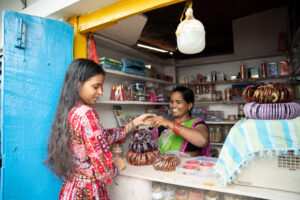
Thirteen years ago, I was in Bihar, India, helping 20 women form a self-help group. In India, a self-help group (SHG) is a group of local women who regularly save money together and access pooled funds for emergencies, needs, or assets. We discussed how saving and lending could work without relying on the local moneylender. I remember watching the women raise their hands, uncertain at first, as they voted for a president, a secretary, and a treasurer.
One role. One hand raised. One small act of ownership at a time.
Last year, I ran into Gahani, one of those original twenty women. She told me the group was still meeting every month. More than a decade later, they were still going.
For years, I had thought of that work in Bihar as the place where I learned about women’s economic empowerment, savings groups, and community-led finance. But sitting at that Easter table, listening to my mom talk about my grandmother and then about herself, I finally understood something deeper. I did not learn about this in Bihar, it was something I learned long before, from my mom, my grandmother, from women who built their own systems before there was language for what they were doing.
Before there were frameworks, there were women riding through fields, negotiating, organizing, and creating opportunities where none had been offered to them.
Formal institutions have often been inaccessible to women for several reasons, including literacy, documentation, and financial jargon. Before there were financial inclusion programs built to include women in financial decision-making, there were women gathering around tables, pooling resources, and choosing trust over exploitation. Before I had words like “self-help group,” “financial inclusion,” or “economic empowerment,” I had inherited the knowledge. The frameworks and the language came later. This knowledge came from women who understood that trust, discipline, and collective responsibility could become a system.
To my mother and grandmother: thank you for teaching me, before I had words for it, that women building systems for each other is not just a program. It is a lineage.
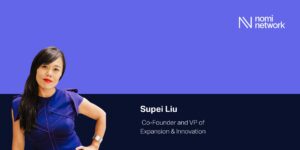
Written by Supei Liu, Co-Founder and VP of Expansion & Innovation.
About Supei Liu
She co-founded Nomi Network with Diana Mao Kelly, lived in Bihar for three years and traveled extensively in Indian rural communities since the inception. Supei currently leads the organization’s expansion and innovation strategy, focusing on expanding revenue models and building creative, sustainable solutions to increase economic opportunities for women and girls.